Yahya Sinwar, the leader of Hamas in Gaza, will be remembered as the fighter whose war ultimately cost him his life. It would be premature to suggest that Sinwar’s death means the war in Gaza is over. Both Sinwar and Israeli Prime Minister Benjamin Netanyahu had hidden agendas throughout the conflict.
Sinwar had a false vision from the outset. He thought the war he triggered on October 7 would bring about the end of Israel, defeat its army, and open the road to a liberated Jerusalem. He bit off more than he could chew and paid with his life and the lives of 42,000 Palestinians—a price he couldn’t have imagined or expected.
Netanyahu was similarly vague about his intentions. He couldn’t tell the military commanders exactly what he wanted to achieve through the war on Gaza. Commanders repeatedly tried to clarify the war’s objectives so their soldiers would know what they were supposed to achieve. Netanyahu never responded, raising questions about what sort of leader he was, taking his country into a war that the army became deeply engaged in without knowing where to go and what to achieve other than Kill Them All and Come Back Alone, as the 1968 Western action movie was titled.
Both men had reasons for extending the war because they felt their political careers and survival would end the day it ended. Sinwar thought the Israeli captives would become his wild card in pressuring Israel into meeting his demands. He erred. He never expected Netanyahu to turn his back on the captives, placing his political survival and that of his government ahead of the captives’ lives and fate.
Sinwar thought the rising death toll among Palestinian civilians would force the international community to intervene, pressure Israel, and stop the war on his terms. He erred in this too. The miscalculated war brought more havoc on the Palestinians than on the Israelis. Assuming that the ratio of deaths among Palestinians and Israelis in almost every showdown was about 10 Palestinians for each Israeli, Sinwar thought that when the number of Palestinians killed in Israel’s airstrikes crossed the threshold of 12,000 civilians, the world would jump to its feet and demand an immediate ceasefire. That didn’t happen. The ratio went up to 40:1, and the numbers kept increasing.
Iran's President Masoud Pezeshkian meets with Hamas leader Khaled Mashal, in Doha, Qatar, October 2, 2024. (credit: IRAN'S PRESIDENCY/WANA (WEST ASIA NEWS AGENCY)/HANDOUT VIA REUTERS)
At the same time, the war seems to be in its beginning as the Israeli army runs in circles, displacing Palestinians from one place to another, changing tactics and goals, and returning to the northern Gaza Strip to mop it up, disregarding earlier announcements that the area had been cleansed of Hamas fighters in the first weeks of the Israeli ground assault.
In his recent interview with the Haredi weekly Mishpacha, Netanyahu argued he was right in standing by his intention to continue the war. He defended his stubborn stand in the face of army generals, public opinion, and international pressure in stalling any deal with Hamas because, as he said, history will remember him as Israel’s savior.
Therefore, for him, the ends always justify the means. That was the lesson he learned from his late father, who advised him to hand over parts of Hebron to the Palestinian Authority after the Wye River Memorandum if that would allow him to safeguard the rest of the “land of Israel.” In this war, Netanyahu behaved like a drunken driver who knew nothing about traffic lights and the meaning of a red light. To his credit, he made it, but at what price, other than gaining more egoism and costing both Israelis and Palestinians dearly?
When both leaders, Netanyahu and Sinwar, become hostages to their zero-sum addiction, the end is clear. Sinwar paid with his life. Netanyahu will eventually pay with his political career. No state commission of inquiry would ever disregard Netanyahu’s behavior before, during, and after October 7. The Israeli public will wake up from its intoxication from the tactical successes in the field to the ugly reality of how bad the war was for Israel and the region. The same applies to the Palestinians, even in Gaza.
Even though Sinwar was seen as personally responsible for the agony and plight of the 2.2 million Palestinians in Gaza, words of mourning spread all over the Gaza Strip and the West Bank. In Arab culture, people believe in honoring the dead no matter how profound their differences with the deceased are. The images and videos that filled social networks of Sinwar’s last moments of life gave the man a prestige he may not have dreamed of among his people. An Israeli soldier who sent his drone into a building to check its interior spotted three armed Palestinians and suspected that Sinwar was one of them. The orders were given to the tank to hit that building. The drone returned to film and showed Sinwar, wounded and seated on an armchair, waving a wooden bar and throwing it at the drone. These images gave Sinwar a prestige none of the movement’s political leaders abroad ever had.
Stay updated with the latest news!
Subscribe to The Jerusalem Post Newsletter
Who takes the steering wheel for Hamas?
What matters is not what the Palestinian public feels today about Sinwar’s death as much as the question of who will take over the steering wheel after him. Before discussing the potential successors, it is worth reminding everyone that any leader who fills Sinwar’s shoes will have the onus of proving to his constituency that he is no less harsh against the Israelis than Sinwar. Therefore, in the absence of an Israeli readiness to cut a deal that brings the Israeli captives back home, ends the war, and releases the agreed-upon list of Palestinian prisoners from Israeli jails, no Hamas leader can move forward. Incentives are needed for whoever is going to run Hamas from now on.
If the lives of the Israeli captives mean something to the government of Israel, then everything should be done, and done now, to close the captives’ dossier and move on to a different reality not only in the Gaza Strip but in the region. The region needs a reality based on a political agreement between two states for two peoples to live side by side along the 1967 lines. No matter how long this war goes on, whether in Gaza, Lebanon, or even beyond, a political settlement will always remain the way out. Why not take a shortcut and spare the Palestinians and the Israelis the pain of an ongoing and meaningless war? Honestly, I don’t see this happening soon. The wounds of the current war will take time to heal, if ever.
One dark prophecy about what may happen to the Israeli captives who are still alive is a decision by the local commanders of Hamas in Gaza to kill all the hostages if they are convinced that they don’t count in Israel’s long-term strategy. They might do it to avenge the killing of their commander or even to preemptively avenge their potential assassination by Israel since they see it coming today, tomorrow, or next year. Sinwar, too, understood that this would be the case with him, even if an interim deal were reached for him to leave Gaza and live elsewhere. He was sure that Israel’s long arm would hunt him down no matter where he hid.
The question is, who will take over from Sinwar? His brother Mohammed Sinwar seems to have the highest chance to fill his shoes. Mohammed was the one who kidnapped Gilad Shalit and kept for himself the veto power within Hamas not to sign any exchange deal with Israel if his brother, Yahya, was not on the list of the Palestinian prisoners destined to be released. One day, Mohammed explained that his mother told him she wouldn’t rest until she hugged her son, Yahya, at home. He took an oath to release him. He did it. Mohammed is a stubborn and ruthless commander and his brother’s closest aide and ally. The commander of the Khan Yunis Brigade, Mohammed is not that easy to deal with. Only a generous incentive can bring him on board. In the meantime, he is the one who will take over responsibility for the Israeli captives. Hamas has no intention to declare who the new boss is out of fear that he, too, would be assassinated by Israel.
Nevertheless, the name of Khalil al-Hayya popped up as the successor. He was the closest to Sinwar and his deputy. He belongs to the Iranian camp and is vehemently opposed to most political bureau members who are more affiliated with Turkey and Qatar. It is the fight between the Shia and Sunni camps of Islamism.
Izz al-Din Haddad, the commander of the Gaza Brigade and the one in charge of the entire northern part of the Gaza Strip, is also one of the potential successors. Even if Mohammed takes over, Haddad remains a candidate to take over once Mohammed is assassinated. They all know Israel would hunt them down just as it did with the senior command of Hezbollah in Lebanon.
Muhammad Shabana, the commander of Hamas’ Rafah Brigade, is also one of the prominent commanders in the southern part of the Gaza Strip. He was added to the list of potential commanders to control Gaza during the war. None of these commanders knows or can be confident that he will still be around when the war in Gaza ends.
Regarding Hamas’ leadership abroad, Khaled Mashaal is currently the de facto leader. Living in Doha, Mashaal believes he can take Hamas away from the war in Gaza, transforming it into a political party with a reserved seat in Middle East politics. He did it before when he took over after the assassination in 2004 of Sheikh Ahmed Yassin, the spiritual leader and founder of Hamas. In two years, Mashal took Hamas to the Palestinian Legislative Council elections, which it had boycotted in 1996. The Arab media quoted him as saying that the time has come for Hamas to become political and join the Palestine Liberation Organization, insinuating his acceptance of the two-state solution.
Mashal is submitting his credentials as Hamas’ moderate leader with whom the West can do business. Whether the West would believe his words and subsequently embrace him is too early to judge. Most of the keys to a solution are in the hands of Israelis, the overriding military power that controls the flow of events in the region. Only if Israel is convinced that the war must end can it end. Otherwise, the sky is the limit.
Elias Zananiri is a veteran journalist from east Jerusalem who has held several senior positions in the PLO as a political adviser and media consultant over the past two decades.
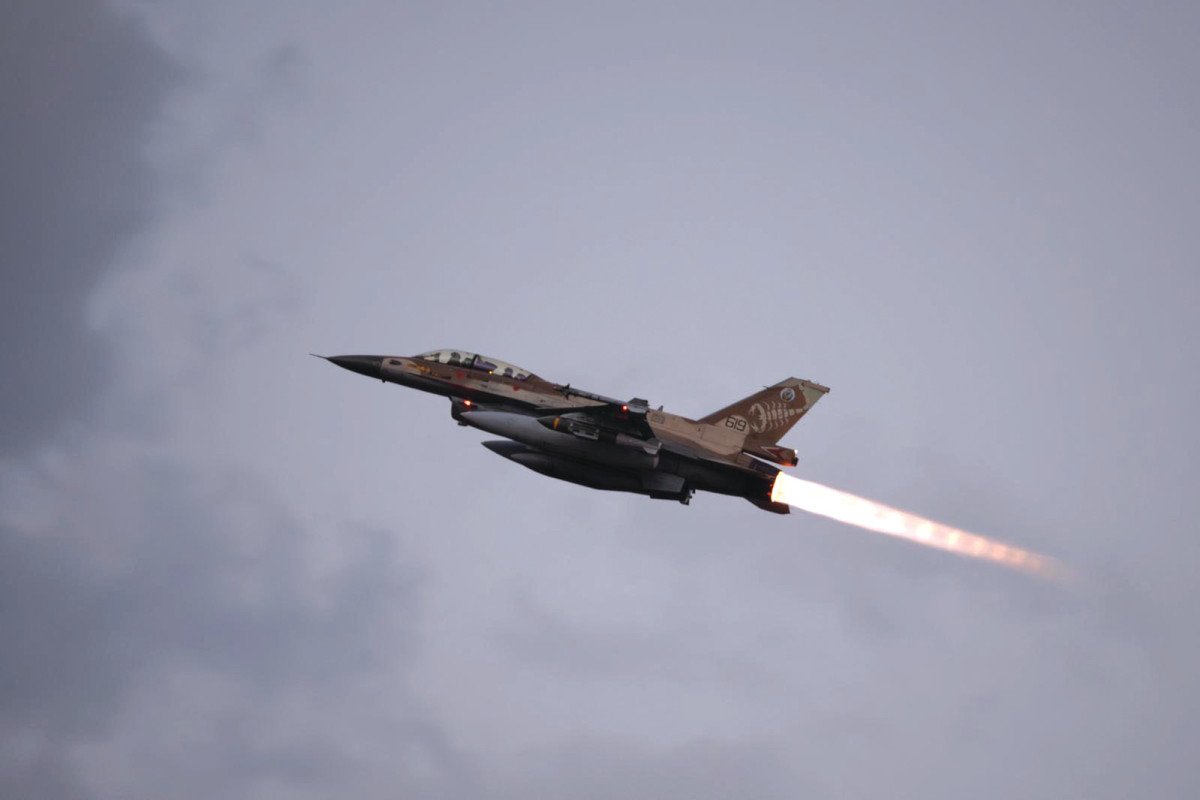
צה"ל ממשיך בתקיפות המתמקדות בתשתיות תעשייה ביטחונית ברחבי המדינה. לפי גורמים צבאיים, הותקפו עשרות אתרים, ובהם מפעלי ייצור, אתרי שיגור ומתקנים של חיל האוויר והים. בין היתר, הותקף אתר ביאזד וכן בסיס ששימש את הצבא האיראני לייצור סוללות ואמצעי לחימה. בצה"ל מעריכים כי כ-15% מסד"כ הייצור הרלוונטי נפגע, וכי קיימת פגיעה ממשית ביכולת הייצור.
עוד נמסר כי הותקפו גם מתקנים המשמשים למחקר ופיתוח, בהם אוניברסיטה ששימשה לפיתוח אמצעי לחימה, כולל תחומים כימיים ותשתיות תת-קרקעיות. גורמים צבאיים מציינים כי המאמץ מתמקד לא רק בפגיעה טקטית אלא גם בשיבוש עמוק של רכיבי התעשייה הביטחונית האיראנית.
בצה"ל מציינים כי קצב השיגורים מאיראן ירד בימים האחרונים: ממאות פריטים ביממה לכ-100, ובהמשך לעשרות בודדות ואף פחות. עם זאת, מדגישים כי נעשים ניסיונות לריכוז מאמץ, וכי מערכות ההגנה ממשיכות לפעול ליירוט האיומים.
בחיל האוויר מעריכים כי יידרשו עוד כמה ימים כדי להשלים את היקף הפגיעה האנושה במערכי הייצור והפיתוח של תעשיות הנשק. "המטרה להביא למצב שבו האיראנים יתקשו להשתקם ביום שאחרי. זה ידרוש מהם משאבים כדי להתחיל ולבנות מחדש את מערכי הפיתוח והייצור של כלל התעשיות הביטחוניות", אומר גורם צבאי.
עלי רצ'א תנגסירי, מפקד חיל הים של משמרות המהפכה| צילום: דובר צה"ל
על פי נגל, "למרות שבאופן רשמי זה לא יצא אף פעם החוצה, כנראה ישראל החליטה לתקוף ללא קשר לאישור או אי אישור, היא הודיעה לארצות הברית וזו אמרה: 'אוקיי, תתקפי'. היא לא הבטיחה שתצטרף".
לדעתו של פרופ' נגל, ישראל לא מתכוונת לתקוף את אתרי הגרעין האיראניים בעת הזו. "את הפגיעה שאיראן ספגה ב'עם כלביא' היא לא הספיקה לתקן, וגם החומר המעשר שנמצא במעמקי פורדו ואיספהאן – אי אפשר להגיע אליו מהאוויר". הוא הסביר כי אם האיראנים ינסו להתניע מחדש את תוכנית הגרעין שלהם, גורמי המודיעין יבחינו בכך מייד. "ניסיון של האיראנים לשקם את האתרים ייראה מהאוויר. לפעמים אתה יכול להיכנס לתוך האתרים עצמם, אבל רוב הסיכויים שיראו אותך מתקרב אליהם". לפיכך הוא העריך: "אני לא רואה איום מיידי כרגע מהגרעין האיראני".
תמונת לוויין מעל פורדו, לפני שארה"ב תקפה את המתקן הגרעיני התת-קרקעי, ליד קום| צילום: REUTERS/File Photo
הוא סבור כי מה שמדיר שינה מעיני ישראל אחר לגמרי. "ישראל לא יכולה להשאיר את תוכנית הטילים הבליסטיים באיראן ללא פגיעה", קבע. "בנושא הטילים הבליסטיים לצערי, חלק מהדברים שנפגעו הם דו שימושיים, הם קיבלו בהם עזרה בעיקר מהסינים, והם משקמים אותם בקצב מהיר. זו אחת הסיבות המרכזיות שנתניהו נסע לוושינגטון, כדי לדבר עם טראמפ בארבע עיניים".
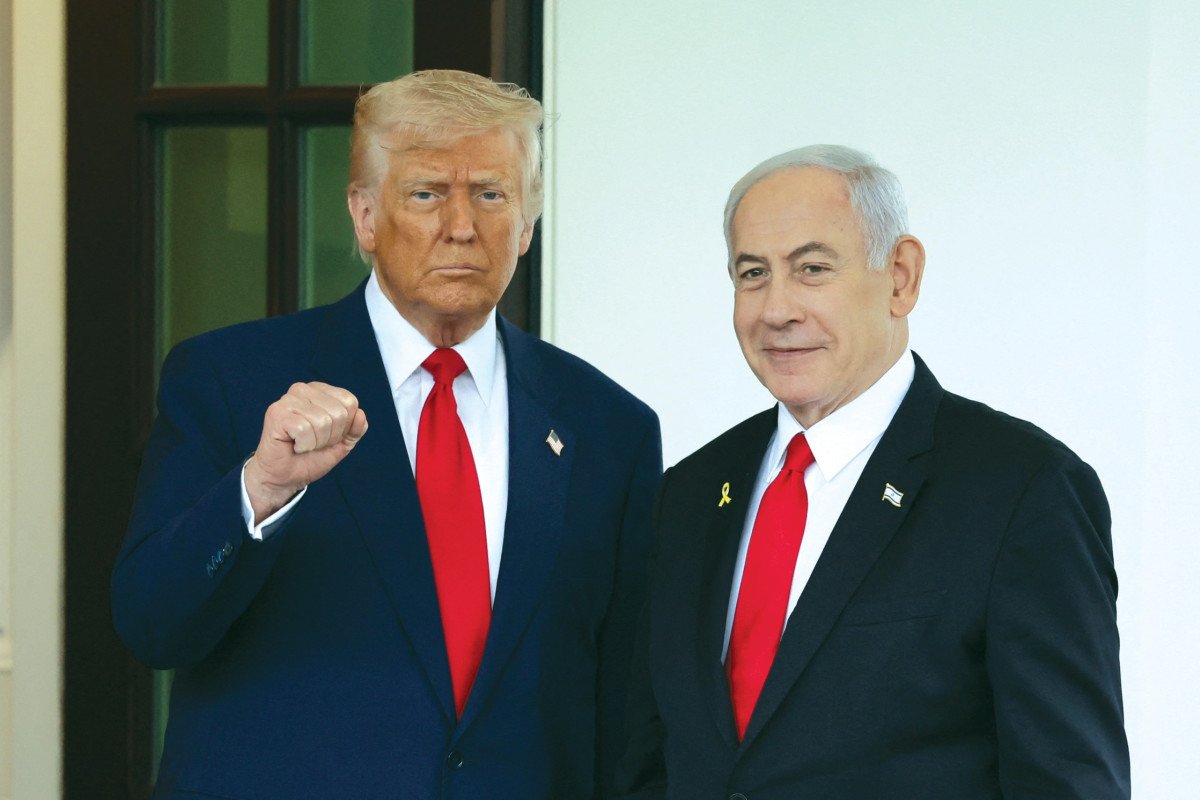
לסיום התייחס לנסיעתו הבהולה של ראש הממשלה לוושינגטון. "יש דברים שאי אפשר להציג בשיחת וידאו קצרה עם הנשיא. עצם העובדה שכשראש ממשלת ישראל מבקש, הוא מקבל פגישה באופן מיידי, זה עצמו מעביר מסר. הסיבה העיקרית הייתה לבוא ולהדגיש את הבעייתיות בכוונות שלהם, מה האיראנים חשובים ומה הם מתכננים, וגם מה הם חושבים על האמריקאים". הוא הדגיש: "אלה דברים שחשוב שייאמרו בחדר סגור. למיטב הערכתי, לא קיבלנו החוצה כל מה שנאמר בין נתניהו לטראמפ, וזה טוב מאוד".
המערב והמדינות הסוניות המתונות במזרח התיכון מקווים כי המשטר האיראני יקרוס באמצעות הפיכה. למרות שהמשטר דתי וקיצוני, מרבית הציבור האיראני הוא חילוני, ליברלי ומשכיל במיוחד. נכון לעכשיו, אין לקבוצות המפגינים ברחובות מנהיג או הנהגה שיכולים לקחת את האירוע המתחולל באיראן צעד אחד קדימה.
צה"ל ומערכת הביטחון הגבירו את הדריכות והפיקוח על איראן
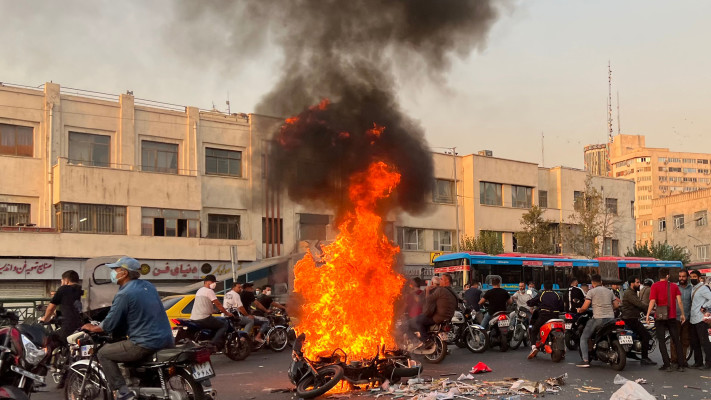
דבריו של נשיא ארה"ב אתמול נקלטו היטב באיראן. ראשי המשטר מיהרו להשתמש בהם כדי להשפיע על דעת הקהל, בניסיון להציג את המחאה כתוצר של התערבות חיצונית. האיומים של הנשיא האיראני, שלפיהם פעילות צבאית אמריקנית נגד מדינתו תיענה בתגובה, נתפסים כחסרי כיסוי ממשי.
חשופה לחלוטין לתקיפה אווירית. תקיפה באיראן (צילום: Hamid Amlashi/WANA| West Asia News Agency) via REUTERS
לאן יוביל סבב המחאות הנוכחי באיראן? התשובה אינה ברורה. נראה כי ההפגנות הפעם עוצמתיות יותר, והייאוש של האזרחים אמיתי. הבעיה המרכזית היא היעדר הנהגה או מנהיג שיכולים להוביל את המחאה לשלב השני של מהפכה. מנגד, ייתכן שמהלכי המחאה יביאו לשינויים בסדרי העדיפויות של הממשל האיראני. על ישראל להמשיך לפעול כפי שעשתה בימים האחרונים: להיות ערנית ודרוכה – ובמקביל לשמור על דום שתיקה.